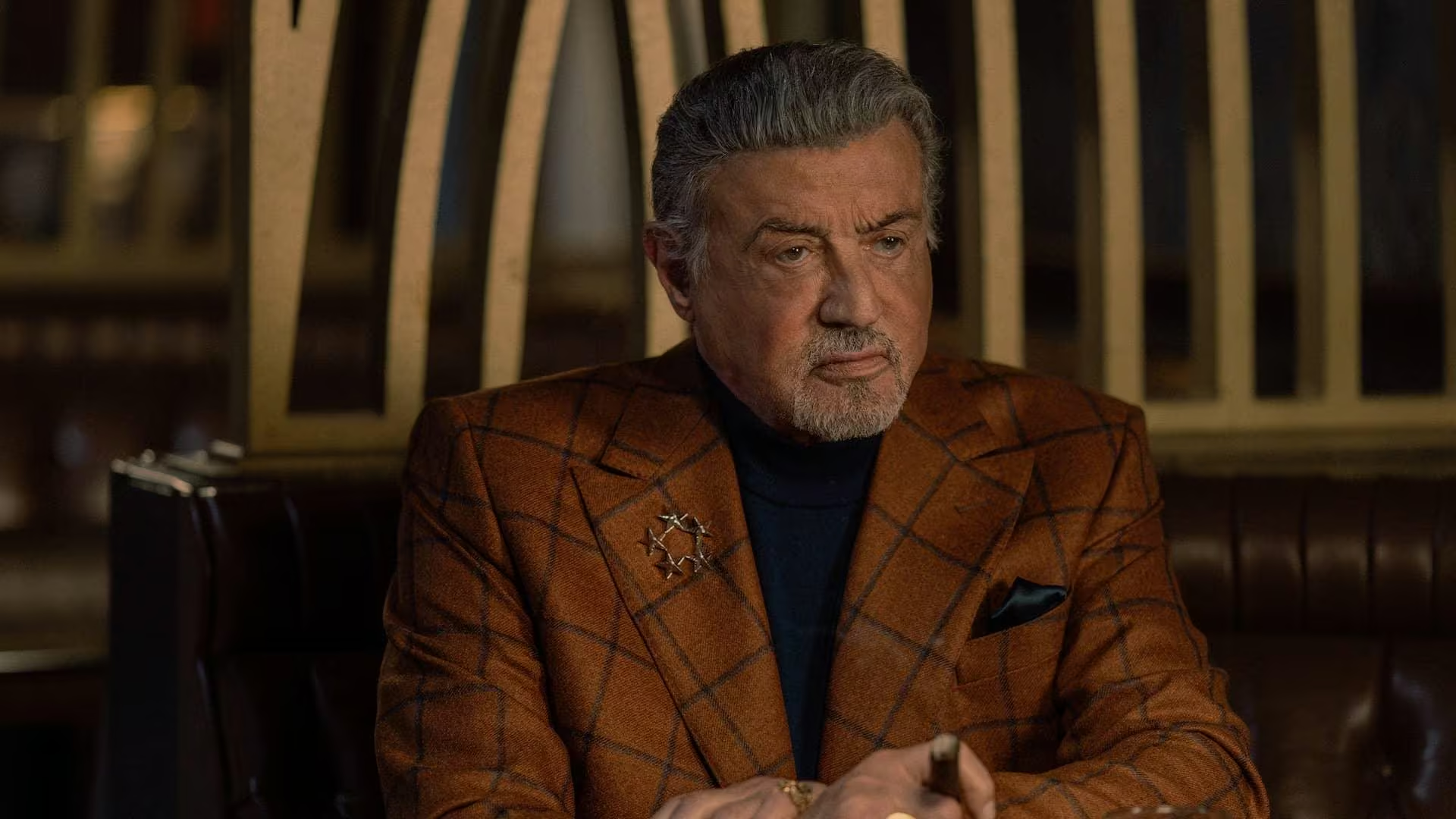
In its fourth season, former New York mobster Dwight Manfredi tries to make his criminal empire in Tulsa more lasting while facing threats from rival gangsters, corrupt politicians and the federal government.
Tulsa King Season 4 TV Review & Summary
Less than a year after the third season, Dwight brings his crew back to Tulsa to make his budding operation a lasting business. However, with threats from the New York mob scene, Oklahoma’s political establishment, and the federal government, he’s already facing danger to his plans. But when a terrible loss hits his personal life, can The General keep his empire from falling if it means losing himself?
Stallone is once again in the role of Dwight, an ex-capo of New York’s mob who now runs an improbable criminal enterprise in Oklahoma thanks to his old-school instincts. What he has going for him is that he’s surrounded by people who are too terrified to stand up for themselves and that he offers no threat. What he does have is the ability to intimidate, negotiate, and improvise his way out of a lot of situations that would crush the majority of people into a wall. His ambition only continues to cause as many issues as it solves.
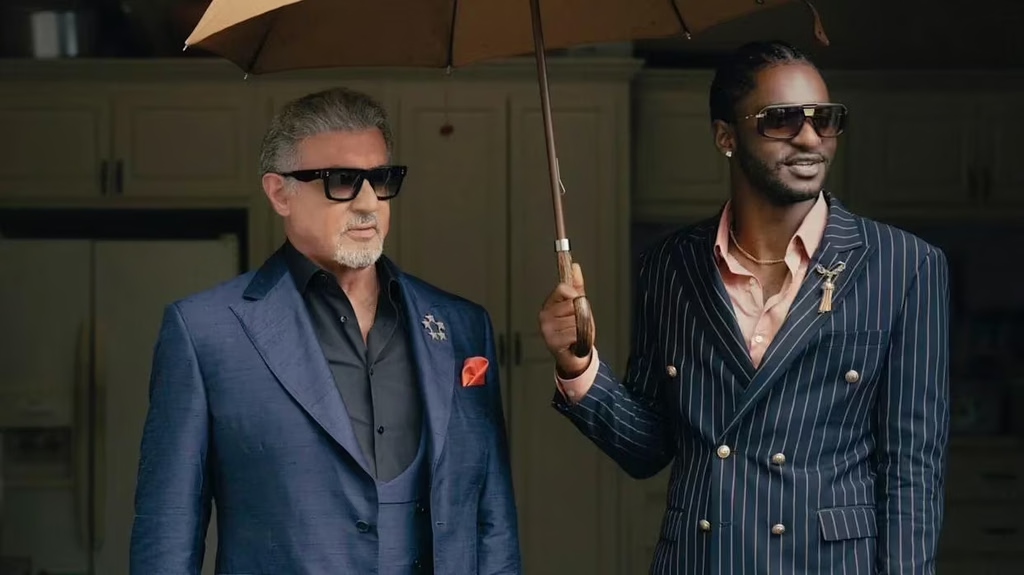
His long-time crew comes back around him! Tyson (Jay Will) is ever youthful and perpetually in a screw-up situation, while Bodhi (Martin Starr) adds his own kind of brain-f wurbled wisdom to Dwight’s professional prankster practice. Some of the most hilarious banter is delivered by the unlikely Goodie/Vince duo, made up of Chris Caldovino and Vincent Piazza, who add another comedic hook to hold the onlooker’s attention throughout the season. Mitch (Garrett Hedlund) is back as well, bringing with him a flux in personal and professional relationships.
Dwight has a lot to fret about as the season’s new conflicts arise. Quiet Ray (James Russo) makes his return as a formidable foe, and new problems trouble the General’s attempts at creating a respectable empire. The inclusion of some corrupt politicians and an ambitious technology entrepreneur brings a modern flavor to the season, bringing old-fashioned organized crime into the ring with newer modes of influence and power.
The tragic loss of humanity somehow also gives Stallone a chance to delve into Dwight’s soft side. But there’s one man under the threats, swagger, and sometimes bouts of violence who has been learning to survive in a society where he is taught to be weak by expressing emotion.
To those who have seen the TV shows The Sopranos and Peaky Blinders, it is evident that there are some significant differences. The first takes an amazingly surreal and bizarre look at the psychological quandaries of criminals, while the second creates a drama out of ambition, strategy, and incongruities of familial loyalty. Tulsa King is less refined in this sense, but it’s a safe bet that it’s more appealing in others: a larger-than-life character, approachable writing, and an odd twist of comedy and gangster melodrama.
The number one rule for Tulsa King Season 4 is that it’s really fun to watch. Try not to take it as a prestige television masterpiece or as a dull crime story instead of a vibrant one, and there is a lot of enjoyment to be had. The show certainly is aware that it has good assets, and it still has the components that made Dwight Manfredi an appealing character to begin with.
It’s hard to argue that comedy isn’t the best thing about the season. Stallone’s pouty and annoyed demeanour is always a safe bet for belly laughs, and Jay Will is always too silly to take himself seriously, making it fun when Tyson makes bad choices. The season is also ripe for Goodie and Vince’s comic chemistry. The characters in their scenes offer a respite from the dirty games and ever-worsening threats.
However, the gangster action is just as it should be when the show doesn’t forget to make way for Dwight. He is a commanding figure, as he is in many ways as quiet as he is in his threats, confident, and sometimes as brutal as he gets. The new schemes for financial gain, such as casinos and fixing horse races, give the show the chance to go down the old pants-down road without losing its grounded concept.
ALSO READ: Marshals Season 2 (2026) Review, Parents Guide & Age Rating
The principal theme is captivating as well. Many are trying to strike Dwight down simultaneously, and the season keeps building up tension via changing alliances, surprises, and elements that just look different when reflecting back on the season. Because of the personal tragedy behind the tale, things get emotional, and Stallone shows a more stoic side to a character who normally wears a hat of intimidation.
The series, however, is still plagued with continuity issues. For example, setups that began in earlier seasons take on greater importance at first, but are then forgotten or seem to get pushed aside at the start of the second season. The Montague distillery, a key player in the third season’s business world, is significantly under the radar in the new chapter. Other characters, like Tina Manfredi and Cleo Montague, also show the sometimes abrupt turnarounds of seemingly important people.
That’s the thing that makes it difficult to focus on investing in the show’s long-term story. When the entire storyline is able to be set aside from one season to the next, audiences have decent justification for questioning why recent events are going to possibly have significance in the future. In an expanding empire and a crime drama, the acts of triumph and disaster should mount up. But Tulsa King is sometimes willing to start things over with Dwight and play out the underdog routine again.
The bad guys are also erratic. So much of Dwight’s achievements depend as much on luck and the moronishness of his adversaries as on his own brilliance. It’s good that the series lets his elaborate plans come together through his ability to strategise things out, but he could have done with being saved a few more times with convenient development. When it comes to characters like Tommy Shelby and the action-packed Peaky Blinders, his triumphs sometimes seem to be part of a more planned risk-taking game.
This is not necessarily the case with the secondary characters. When you consider how many times Tyson gets a wrong answer and refrains from learning anything, and might not even have been aware of what to do, you begin to see where it gets aggravating. Mitch has a romance, but the story skips too quickly over it, and his character’s 18-year age difference is never explored much. These flaws point to a show that knows how to be entertaining but isn’t quite as concerned with challenging its characters or helping them to grow uniformly.
Ultimately, Tulsa King Season 4 is both a success and a missed opportunity. It delivers action, humour, suspense, and a strong central performance, but its refusal to address longstanding structural problems prevents it from reaching its full potential. Fans looking for more of the same will probably be satisfied. Viewers hoping for a more coherent, ambitious crime saga may find themselves asking why the series keeps starting over.
Why Season 4 Is Not Suitable for Younger Viewers
Although Tulsa King often feels like a comedy because of Dwight’s dry humour and the crew’s ridiculous situations, the show is still a crime drama built around organised crime, intimidation, and violence. Its jokes do not erase the consequences of its characters’ actions, and its lighter moments sit alongside serious threats, criminal schemes, and emotional trauma.
The series carries a TV-MA rating in the United States, indicating that it is intended for mature audiences. Paramount+ lists the rating on its official streaming page.
Season 4 continues to explore criminal ambition, political corruption, personal grief, and dangerous rivalries. Viewers should expect strong language, threats, and potentially disturbing violence, alongside adult relationship themes and references to criminal activity. Parents should be particularly cautious about allowing younger teenagers to watch without supervision.
My advice is simple: do not mistake Tulsa King for a harmless comedy just because it is funny. Its humour is part of its appeal, but its criminal world remains dangerous and frequently brutal.
Why Is Tulsa King Season 4 Rated TV-MA?
Tulsa King Season 4 has a TV-MA rating. The content is in keeping with the age-appropriate use of strong language, criminal violence, threats, and adult themes that have been hallmarks of the series. It is a TV season and therefore does not have a separate official rating from the MPAA. The following guide is based on the content patterns presented in the series review and is designed to document those patterns. The number of episodes in Season 4 has yet to be independently verified.
Violence: This season is set in a criminal world where threats are a regular occurrence, as are physical intimidation tactics. Dwight’s issues with other gangsters bring the danger of violence and turmoil. Violent encounters and terrible consequences are possibilities because of Dwight’s dealings with competing gangsters. Executions and retribution for criminals are mentioned in the story. There’s also emotionally upsetting content, as a significant personal disaster intrudes upon the story. The series is more famous for its episodes of violence and bloody injuries.
Sexual Content: The series includes adult characters and sexual elements. Season 4 also presents another romance subplot with Mitch and his new love interest, involving an 18-year age difference, where the dynamics come into question. Previous seasons have featured sex scenes and strip club stings, but this doesn’t mean that every single episode of Season 4 will have them.
Strong Language: Strong language is prevalent in Tulsa King in the form of profanity. The series features the use of the F-word and insults like “shit,” “asshole,” and “bastard.” Religious exclamations and other coarse expressions are also present. Parental guides submitted by viewers characterise the profanity as heavy (or sometimes, “more than 20 F-words in a single episode,” according to one submitted parental guide). Unfortunately, a verified number of sexual expletives, scatological terms, deity references, and slurs cannot be provided here. Many of the counts need not be included without verification.
Alcohol/Drug Use: The atmosphere of the show includes alcohol and crime-related activities, and drug dealing and references to marijuana were seen in previous seasons. The business story in Season 4 also includes an attempt to make Dwight’s empire legitimate. The exact level and frequency of drug use in the new season have not been independently determined.
Tulsa King Season 4 Release Schedule
Season 4 consists of ten episodes released weekly on Fridays through Paramount+. The premiere aired on October 16, 2026, and the finale is scheduled for December 18, 2026.
| Episode | Release date |
| 1 | October 16, 2026 |
| 2 | October 23, 2026 |
| 3 | October 30, 2026 |
| 4 | November 6, 2026 |
| 5 | November 13, 2026 |
| 6 | November 20, 2026 |
| 7 | November 27, 2026 |
| 8 | December 4, 2026 |
| 9 | December 11, 2026 |
| 10 | December 18, 2026 |
Conclusion: Is Tulsa King Season 4 Worth Watching?
Tulsa King Season 4 is a fun continuation of the criminal exploits of Dwight Manfredi; it’s a mix of brilliant comedy, high-tension gang fights, and heart-wrenching plotlines, with the vaudevillian and intimidating presence of Sylvester Stallone. The things to love about it are that it’s funny, its protagonist is pretty likeable, and it makes normal ideas of crime spring to life on television screens. The most serious flaws are the lack of consistency, underdeveloped supporting characters, and the need to rely heavily on convenient plot developments to secure a victory.
If you are a fan of Stallone, crime-sting dramas, and dark comedy, then this season is for you. Its reset action might frustrate some viewers who like a lot of continuity and developed character arcs. The TV-MA rating, along with strong language, violence, and mature content, is appropriate for mature audiences.
To sum up, Tulsa King Season 4 provides the entertainment fans have come to rely on, but it can never escape its inability to be a consistently great crime drama. Dwight’s presence is still engaging, but he deserves a story that evolves from his past rather than one that starts again from a re-normalised base of the empire.
ALSO READS: VisionQuest TV (2026) Review, Parents Guide & Age Rating

Rebecca Hollis is the founder of Screen Parent Guide and a film content analyst with seven years of experience reviewing films for an independent ratings consultancy. A Film Studies graduate of Emerson College, she specialized in content classification and how ratings systems communicate, and often fail to communicate, what families can expect from a movie.