Wildwood is rated PG-13 by the MPA for strong fantasy violence/bloody images, thematic material, suicide-related material, brief partial nudity and language.
Wildwood Movie Review
Wildwood is directed by Laika’s president Travis Knight, from a script by Chris Butler, based on the novel of the same name by Colin Meloy and Carson Ellis. The studio acquired the rights in 2011, and the finished film is the longest stop-motion feature ever made. If you enjoyed Coraline, the similarities are impossible to ignore: an unhappy girl, another strange world of talking animals, and a bad guy with his own motives.
There’s a healthy dose of Jim Henson’s Labyrinth in the world’s weirdness, its peril, and its tangible, hand-crafted quality. Laika’s Kubo and the Two Strings is another close cousin, but Wildwood is far more a story of war and grief.
A boy falls off a balcony and before the story can find its footing, grief is the loudest voice in the room. Prue McKeel (Peyton Elizabeth Lee) is a bored teen in Portland, Oregon, who is sick of her mundanely safe, tiny life. Her parents’ one rule they refuse to budge on- her baby brother Mac doesn’t leave the house is pitifully hard to follow, and Prue dashes through it for a brief jaunt with a toddler.
One moment a murder of crows arrives, swoops Mac up, and flies him out to the Impassable Wilderness, the thick forest surrounding the city and strictly off-limits. Prue has only seconds to follow. Should she chase her brother into a place no one is supposed to enter, knowing that the mistake is hers?
Prue is not alone on this journey. What is behind the treeline reveals not just the woods, but even more threatening: Wildwood, a land of animal inhabitants and the human settlements torn apart by war. Over this disaster hovers the Dowager Governess Alexandra (Carey Mulligan), a ruler hollowed out by the loss of her son, whose body was never found. Mac has landed in her hands, and Alexandra’s grief has curdled into something that threatens the whole forest.
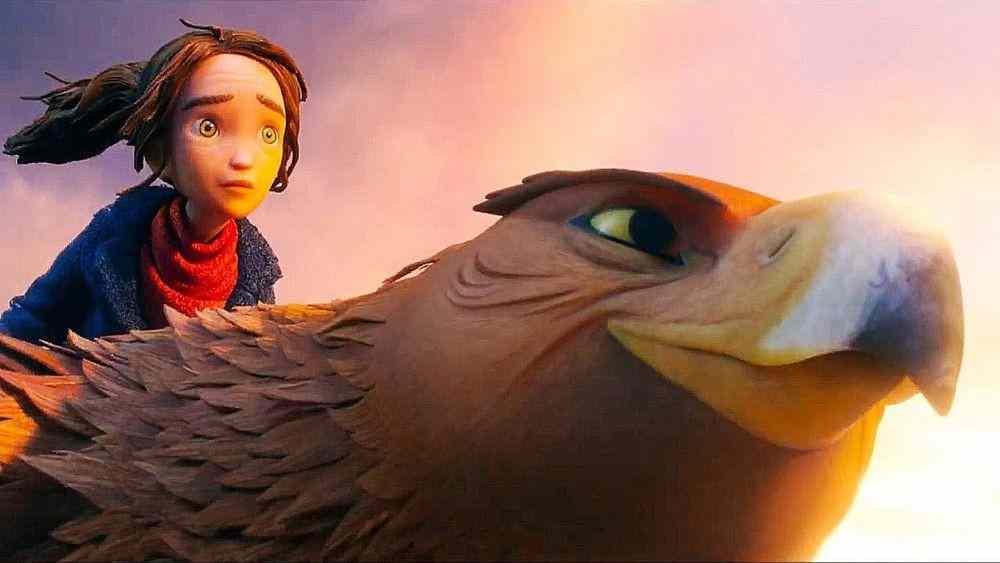
There are so many memorable characters in a crowded world. Septima (Awkwafina) is a wisecracking rat with a big heart under her furry exterior. The General (Angela Bassett), a flying eagle, is the most visually stunning character of the film, and there are more: Richard E. Grant, Tom Waits, and Mahershala Ali all lend their voices. The cast swings Prue and Curtis into a mystery involving how to retrieve Mac, as well as the war between the forest’s opposing forces – and the ivy choking Wildwood.
Laika was never afraid to scare the audience, but Wildwood might be Laika’s biggest risk. Wildwood is a story about what grief does to a person who has nowhere to direct that grief. Alexandra is not a villainess who craves power for its own sake. She is a mother who just wants to feel something, anything, after the death of her child, and will destroy a world to do it.
The movie raises a difficult issue: When pain turns into cruelty, how much sympathy does the person still deserve? This film doesn’t make her easy to forgive, and I respect that. Too many contemporary family films chase their villains into an instant reconciliation at the end. Wildwood allows Alexandra to be known, without condoning her.
This is why it works: Mulligan’s soft, measured delivery makes terrible acts sound almost gentle, and the contrast is unsettling in the best way. Lee and Tremblay, meanwhile, lend this chewiness a touch of melancholy, and you can already tell as the forest consumes them that these kids have a load to bear.
The supporting cast is good too; none of them intrudes into the movie by sounding like a recorded voice. Awkwafina, Grant and Waits all are quite convincing in the various roles they are asked to play, which is essential in a film that’s got as much history as this one does.
It isn’t flawless. The idea that Prue’s home life invites interrogation about preferential treatment and the protectiveness extended to a younger brother is fun, but the film never wrestles with the fact that it pits a pair of siblings against each other. And at over two hours, patience is part of the ticket price. But the technical aspect is also hard to find fault with. The faces are lively; the aging Prue has an older quality about her and Curtis’ terror is clear.
The forest looks dense, the creatures are unique, and the third-act battle- one massive score of minuscule figures swapping weapons and dodging masses of their own kind-is awe-inspiring, given that, in the film, every frame was crafted by hand. Now just imagine tackling that scene, one infinitesimal movement at a time. It should be seen on the biggest screen you can find.
Content Level Commentary:
This is where you are going to want to pump the brakes, guys and gals. Unlike Laika’s other movies, for the first time with Wildwood, we get a PG-13 – and you know what? They do so right here. Coraline and ParaNorman dabbled in the frightening nightmare fuel territory, but they maintained PG status. Not so here, folks. We start with a death. We have a baby threatened multiple times. The conflict ends in decapitations.
The MPA also flags suicide-related material, which ties directly into the film’s central theme of grief and loss.
The trailers are selling cute animals and a mystical forest, and that doesn’t begin to do it justice. I just feel like families should go in with a real measure of awareness. If your kid is younger than ten, or is squeamish when it comes to danger, death, or scary imagery, I’m not sure this is an easy pick. My advice is to treat it like a dark fantasy novel in the vein of Redwall, where the furry faces do not guarantee a gentle ride.
Why is Wildwood rated PG-13?
Wildwood is rated PG-13 by the MPA for strong fantasy violence/bloody images, thematic material, suicide-related material, brief partial nudity, and language.
Violence: The film starts as a small boy plunges to his death from a balcony. A murder of crows kidnaps a toddler and carries them to a restricted forest. Characters perish during the story, and the deaths are permanent. A baby is endangered on several occasions. Lethal creatures and hostile factions menace the protagonist duo as they navigate the woods. A dark form of vegetation begins to engulf Wildwood, placing residents in danger. A villain performs cruel actions, and the film does not gloss over the fallout. A massive third-act battle breaks out between the various forces of the forest with soldiers, beasts, and individuals wielding weapons. Several combatants are decapitated in the fighting. The MPA adds images that are bloody, which occur during this fantasy violence.
Sex & Nudity: The MPA mentions occasional partial nudity. No sex scenes and no romantic situations are listed in the material I found for this article.
Profanity: The MPA has language as a rating factor, but normally a PG-13 film translates to a handful of weak-to-moderate words.
Alcohol/Drug Use: None.
Conclusion:
Wildwood is a stunning, tragic stop-motion fantasy about a girl who ventures into a secret world to recover her fallen sibling. It’s a film about grief and regret, about what the loss of someone can do to a person, and it features an outstanding villain turn from Carey Mulligan as well as some of Laika’s finest ever animation.
Rating as a guide, PG-13 content is appropriate. There’s peril to children, death, an enormous skirmish with decapitations, gory imagery, suicide-related content, a moment of brief partial nudity, and some language. Not a film for children and potentially too intense for younger audiences of any age.
I can recommend it to teens and grownups who enjoy dark fantasy and homemade animation, and to parents who will be watching with older children and discussing it afterward. If you liked Coraline, Kubo and the Two Strings, or the gloomier bits of Labyrinth, you should see it. If you were just looking for an easy family film with talking animals, maybe not so much.

Rebecca Hollis is the founder of Screen Parent Guide and a film content analyst with seven years of experience reviewing films for an independent ratings consultancy. A Film Studies graduate of Emerson College, she specialized in content classification and how ratings systems communicate, and often fail to communicate, what families can expect from a movie.