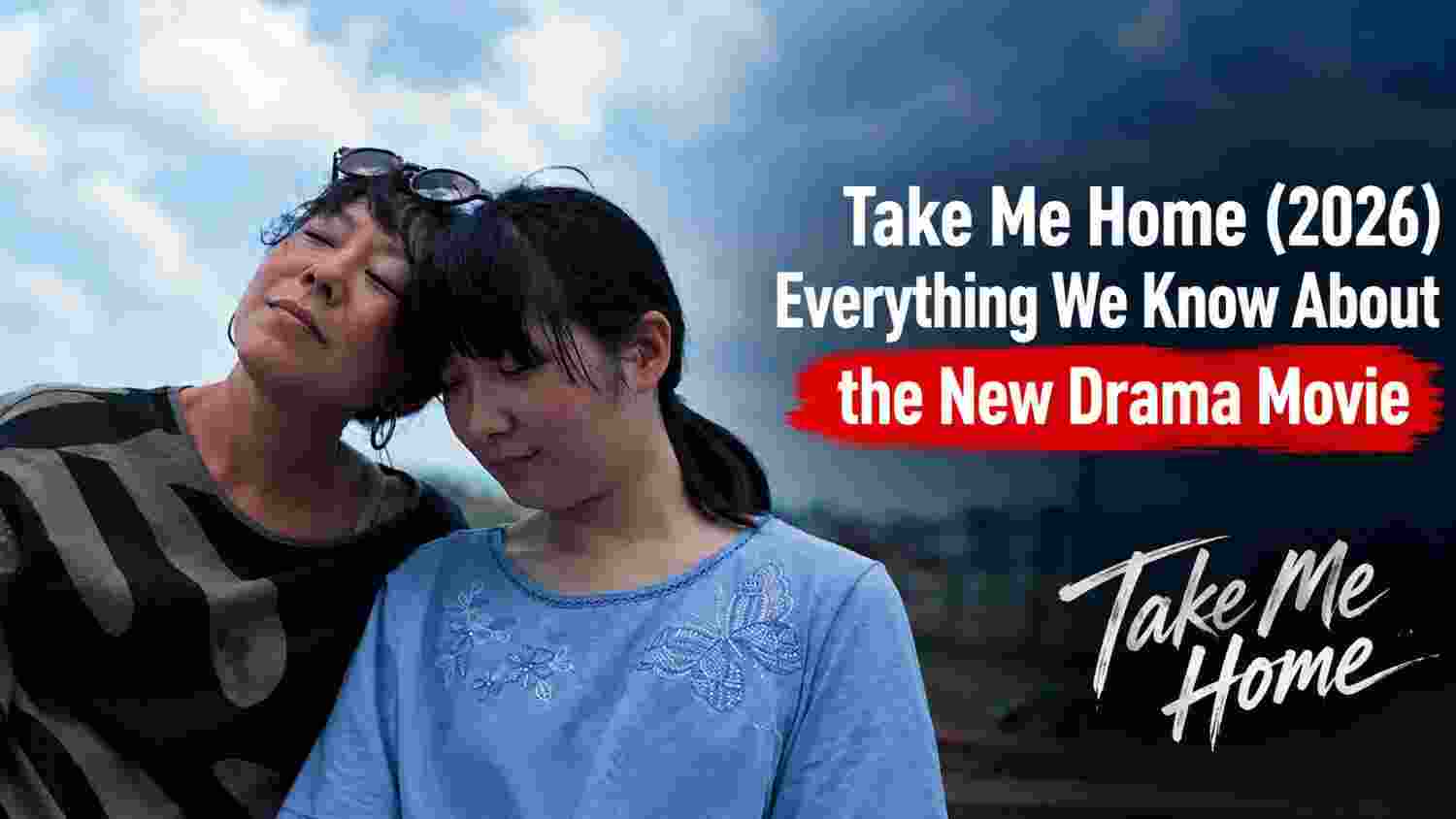
Anna (Anna Sargent) is in the shower with her mother. It’s the first real scene of the movie, and it’s not clear, watching it, who’s actually taking care of whom, that ambiguity is the whole engine of “Take Me Home.”
Anna is a 38-year-old Korean adoptee with a cognitive disability living in a sun-bleached Orlando house with her aging parents, and the arrangement works because everyone quietly covers for everyone else’s gaps.
Then a heat wave hits Florida hard enough to knock that arrangement over, and Anna is stuck asking a question her family has spent years avoiding: what happens to her when her parents can’t hold this together anymore?
The father, Bob (Victor Slezak), still drives them around and still runs the household in his head, except his head isn’t cooperating the way it used to, and the heat wave is what finally makes that impossible to ignore. Joan (Marceline Hugot), the mother, has been quietly absorbing the difference for longer than anyone’s said out loud.
Then there’s Emily (Ali Ahn), Anna’s sister, who moved to Brooklyn and built some distance from all of this, and gets yanked back into it whether she’s ready or not. James (Shane Harper) shows up too, tangled into Anna’s own idea of what independence might look like for her.
Director Liz Sargent, whose own sister is the Anna this movie is built around, isn’t interested in turning any of this into a medical-drama plot with a diagnosis and a resolution. It’s closer in spirit to something like “Crip Camp,” blunt about what decline actually looks like day to day, without needing a crisis-of-the-week structure to get there.
Recommended: Being Heumann Review, Parents Guide & Age Rating
Sargent has said the film is intentionally anti-ableist in how it was made, prioritizing accessibility at every stage of production, not just on screen, and that shows, there’s a scene in a supermarket, choosing bread, that a lot of critics have singled out, because it’s such a small task and the film lets it become genuinely overwhelming for Anna, too many choices, too much pressure, and somehow that says more about her than any dialogue scene could.
What the film is actually asking isn’t “how do we take care of Anna.” It’s whether a family already flattened by a healthcare system that doesn’t much care about them is even capable of imagining a version of independence for her that isn’t just code for “someone else’s problem now.” Critics have split on whether the back half earns its own bleakness.
One review called it a promising drama that ultimately betrays its own best qualities by the time it lands its ending, and I get that read, even if I don’t fully share it.
Nothing here is graphic, and that’s worth saying plainly because parents skimming for content warnings tend to assume “family crisis drama” means something worse than it is, there’s no violence in the traditional sense.
What there is, is a father’s dementia becoming a physical safety issue during a heat emergency, a death in the family, and the raw discomfort of watching people who love each other completely mishandle a crisis because nobody taught them how not to. That’s heavier material than a jump scare, honestly, just quieter, if you’re watching this with a teenager who’s got a parent or grandparent dealing with memory loss, don’t expect the movie to hand you an easy landing. It won’t.
Directed by Liz Sargent. Starring Anna Sargent, Ali Ahn, Victor Slezak, Marceline Hugot, Shane Harper. Running time: 99 minutes. Theatrical release September 23, 2026. Updated September 24, 2026.
Why is Take Me Home rated Not Rated?
Take Me Home hasn’t gone through the MPAA. That’s typical for a limited theatrical release from a smaller distributor like WILLA, it doesn’t mean anything about content quality, just that nobody submitted it for a formal rating. Based on festival coverage and critic reactions, this is a film that earns caution for its subject matter, not for anything explicit on screen.
Violence: None depicted in the conventional sense, no fights, no weapons. The closest the film gets is a medical emergency triggered by extreme heat that puts a parent in real physical danger, and the death that follows. There’s ongoing tension around a father’s declining mobility and memory, plus moments of real panic tied to caregiving breakdowns, but it’s all emotional weight, not anything graphic.
Sexual Content: None reported by critics who’ve covered the film. The story is about caregiving and a disabled woman’s path toward more independence, not romance, though a male friend does factor into where Anna’s story is headed.
Profanity: No specific counts have surfaced from reviews, and nothing suggests heavy or frequent swearing is a feature of the dialogue, which by most accounts leans naturalistic and largely improvised. Some casual language is plausible in a contemporary family drama, but it doesn’t appear to be a defining element.
Alcohol/Drug Use: None reported. The closest the film gets to substances is managing a parent’s medication amid his declining memory, which is a caregiving detail, not drug use in any recreational sense.
5 Related FAQs
- Is Take Me Home based on a true story?
- Who plays Anna in Take Me Home, and is she disabled in real life?
- What is the Take Me Home movie rated?
- Where was Take Me Home filmed?
- Is Take Me Home streaming anywhere, or is it only in theaters?
Reference Sources:

Rebecca Hollis is the founder of Screen Parent Guide and a film content analyst with seven years of experience reviewing films for an independent ratings consultancy. A Film Studies graduate of Emerson College, she specialized in content classification and how ratings systems communicate, and often fail to communicate, what families can expect from a movie.